JUNE 2026
Finding the Nexus Between Accountable Tech and Housing Development
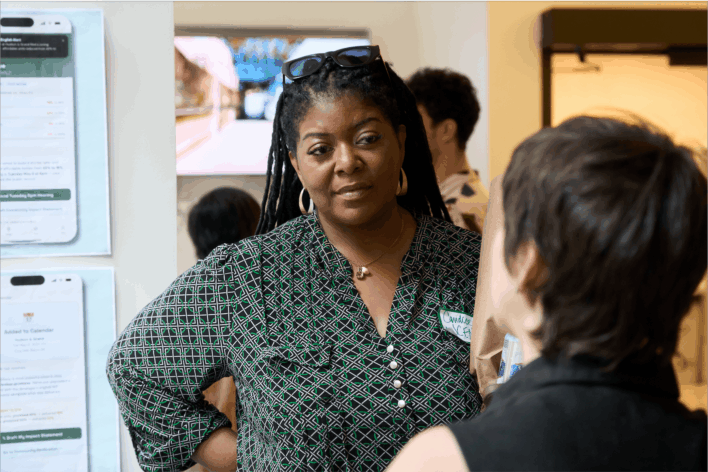
An interview with Candice Walker (MFA DSI ‘26) on her co-creation workshop The Jersey City Equity Nexus that was presented at Makeshift: Accountable Tech by Design conference.
Riley Ladner: I understand you came to this project through your years of experience working in the real estate industry in Jersey City. I’m curious if you had an experience in the business that served as a lightbulb moment and triggered this project?
Candice Walker: For sure, because by the end of my time in real estate, my target market was high-end luxury apartments, so I learned what needed to happen for those buildings to get developed. I had colleagues and friends working with first-time home buyers, where a lot of us lived. Ultimately, I saw the difference in the market and the turnover. I started to see more and more developers buying houses that used to be in the market for first-time homebuyers.
A friend’s grandmother passed away, and her house went on the market. Another friend of mine sold the house to someone who presented himself as someone who was buying a home for his family, but he was actually an investor. Then that block immediately began to change once that investor got their hands on the first piece of property.
I was so immersed in real estate that I was almost blinded to the outside. Then the historical context of what BIPOC experienced began to emerge in my day-to-day life. Whether it be the terrors of move-in bombing, the histories of Seneca Village and Tulsa, what BIPOC have experienced throughout American history was at the forefront, and I thought about the cycle of taking land and property from BIPOC and how that was occurring in Jersey City.
Originally, I never thought my interest in housing development and justice would go further than nerding out. I always wanted to be a developer and create my own communities. “Emerald cities” I would call them, communities that were sustainable and self-sufficient.
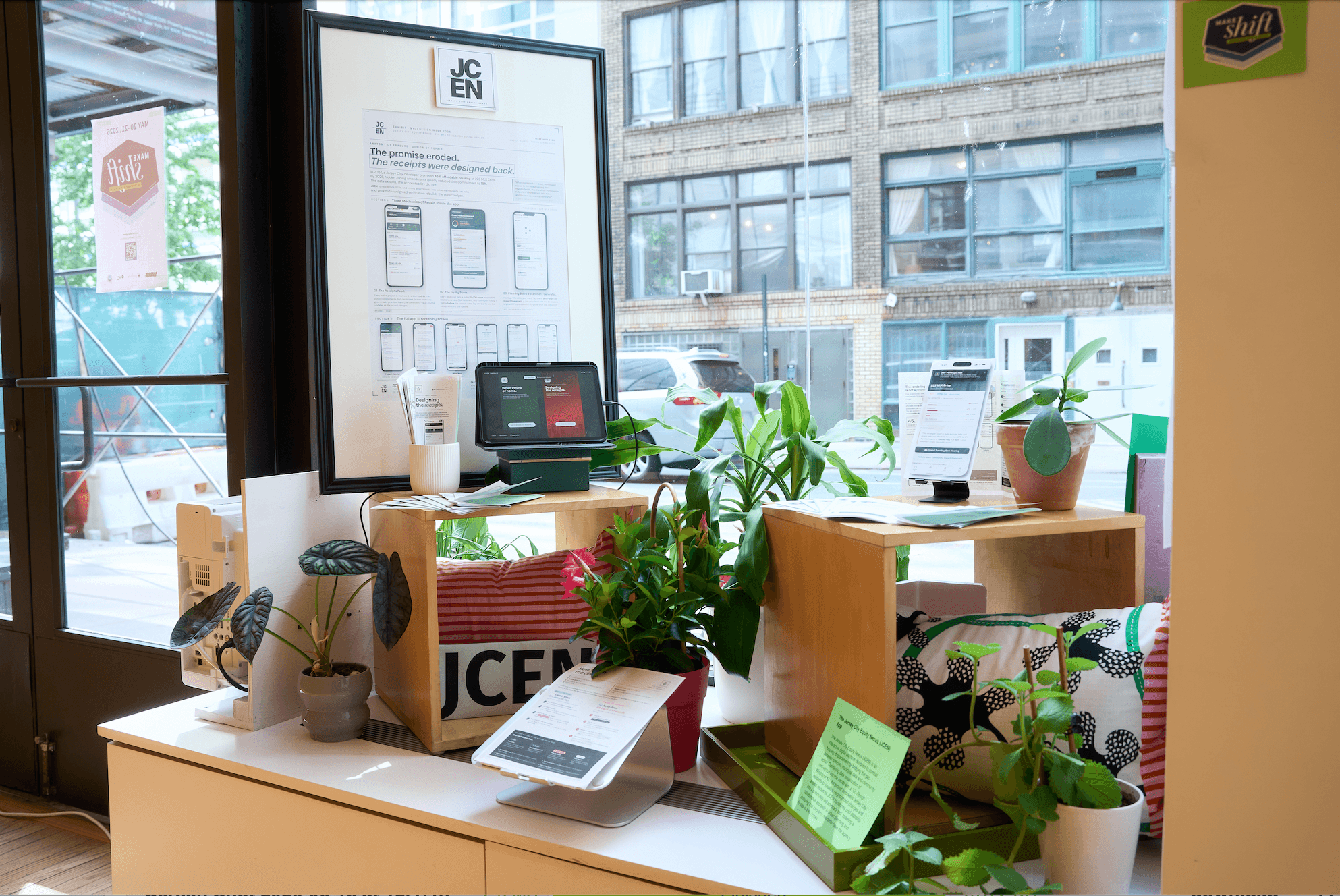
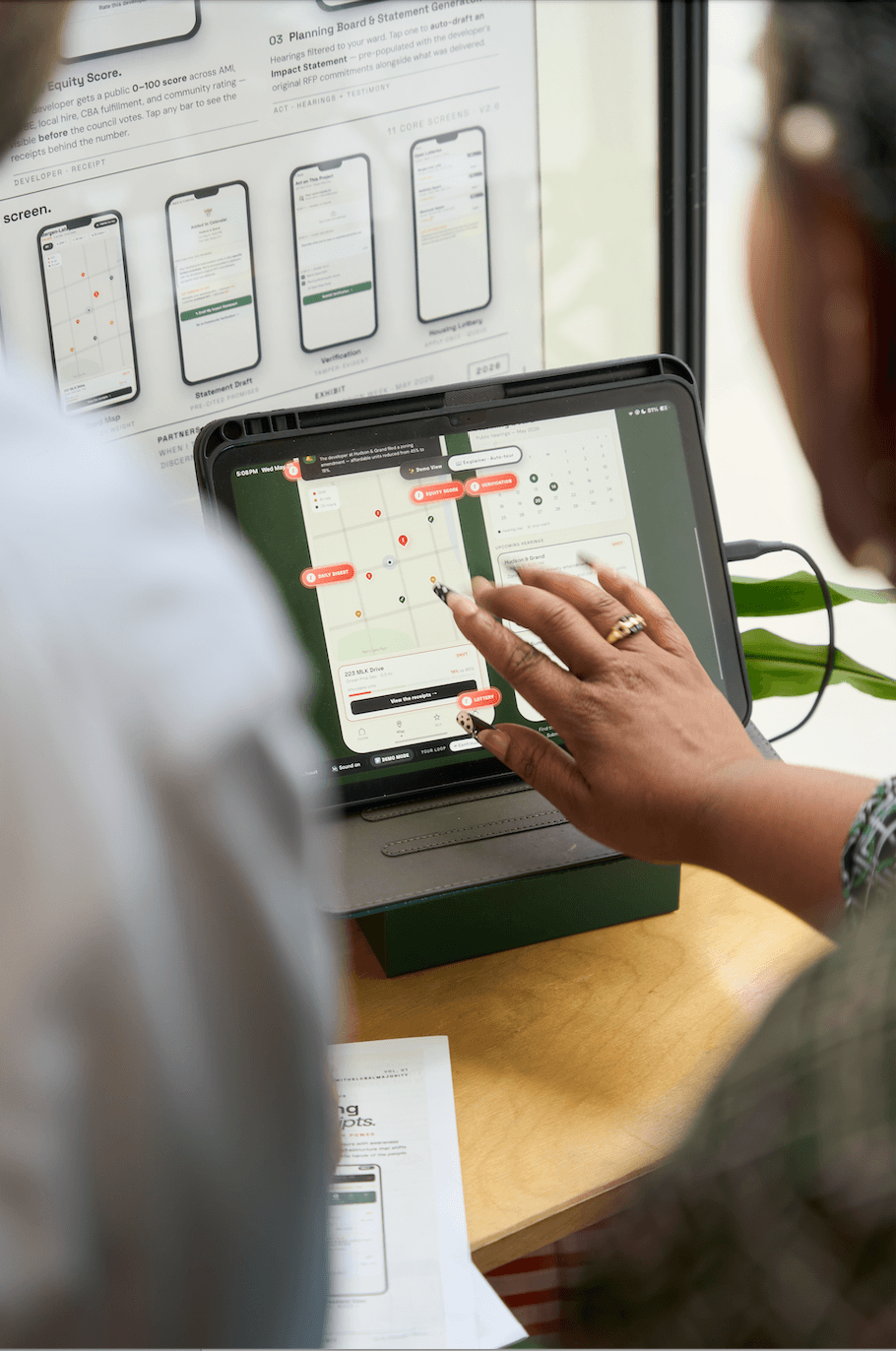
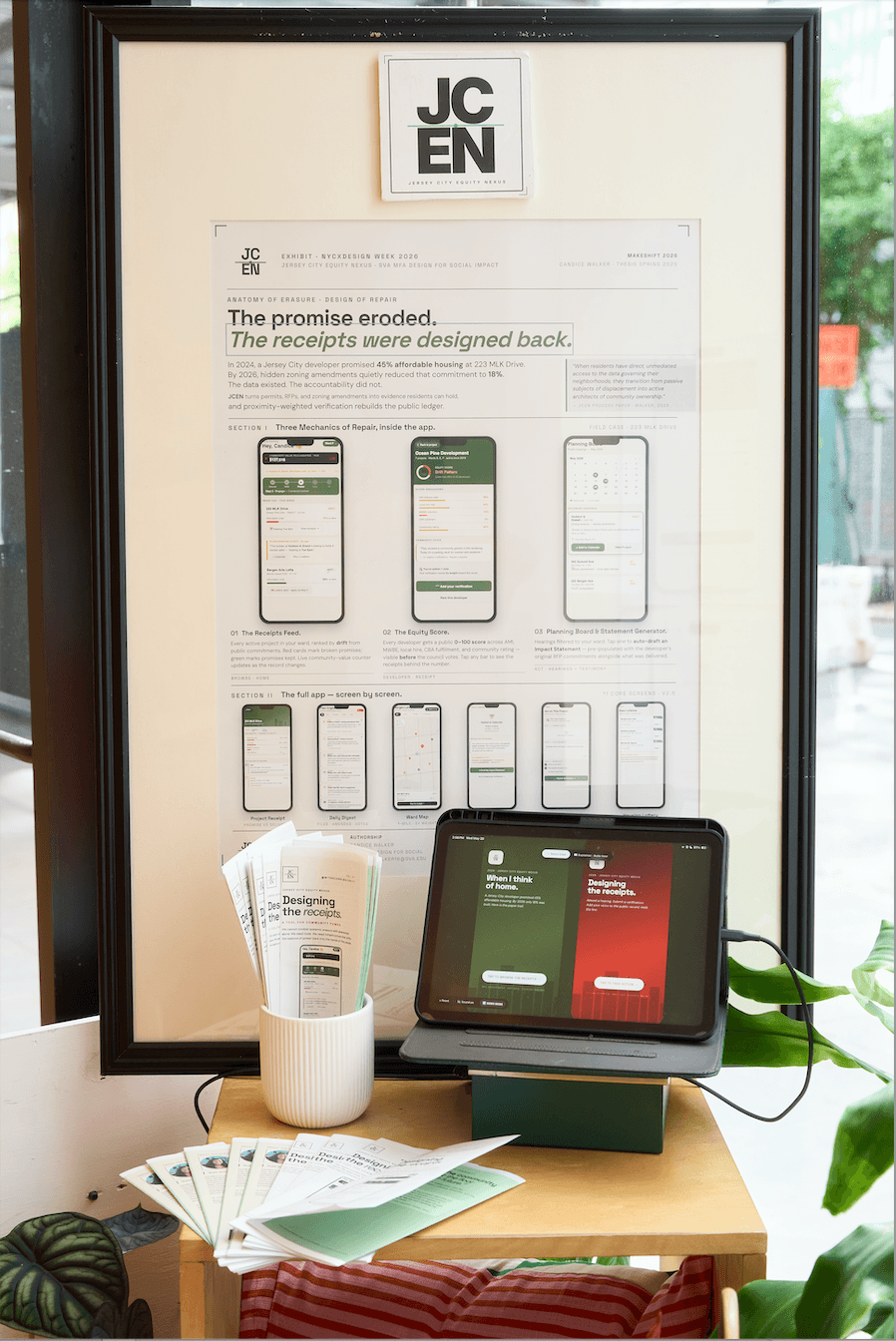
RL: At MakeShift, you showcased the Jersey City Equity Nexus (JCEN), both a co-creation workshop and a digital app. Can you take me through the iterations of the JCEN app?
CW: My original thesis intervention was going to be a dashboard for developers, given my background, experience, and knowledge of proptech (property technology) and the platforms they use in the industry. Through my research, I discovered I was targeting the wrong audience: developers. I originally targeted them because I wanted to change how they operated with respect to social impact metrics. And I always knew they should be developing with the community in mind.
But with the developer focus, I then realized I was leaving the community out. The community had the voice that needed to be heard. I had been involved in urban planning and community board meetings from all angles: as a Development Project Manager, a Legal Assistant, and a Community Member. What stuck with me is whose narratives get to leave that room? Never the community.
I developed the dashboard as a research build for the New York Build Expo. At the Expo, developers spoke about the need to take social metrics into consideration when developing. It would be helpful for them to have someone in the community to hold them accountable. So if even developers were interested in the community’s voice, where’s the disconnect?
So I went home and read about new developments on social media, and it dawned on me that community members were already doing the work – calling out and questioning. The developers weren’t the answer. We were already doing the work, but didn’t have the resources to get a response.
Developers want accountability, data is out there – so the Jersey City Equity Nexus serves as the tool they need. An app is accessible and a way to frame data through action. I called it “nexus” because it’s a connection point for all the information that’s already out there – now accessible to the community. Everyone signs in and sees the data and info through the position they sign in as. For example, developers can see whether they’re meeting their affordable housing numbers and their impact scores.
RL: As a social designer, how does accessibility define your design of the JCEN app?
CW: Accessibility is a huge pillar of the JCEN development. It’s all about being a connection point of community, and helping developers achieve the best possible outcomes for the community. It was paramount in my process to create a level playing field of information and data so that anyone can take action. Essentially, accessibility is totally pivotal to the whole intervention. I put myself in the place of each person who had a touchpoint to the issue and considered what’s my part. Who else am I connected to? It’s all about collective action.
My first project was my community map for MFA DSI first-year course, Disruptive Design. With the community map, I looked at who people could turn to and go to for assistance in my community in Jersey City. So I traced those connections and mapped the actual locations through my survey data. I learned that, due to gentrification, a lot of the resources were being pushed out. So it made me question: were the resources being pushed out or the people?
Part of what makes the Jersey City housing market so inequitable is that Jersey City allows developers to pay tax abatement fees allowing them to avoid providing affordable housing. Further, once developers get approval from Jersey City, they can change whatever they want about their approved developments, and residents would have no idea. Residents deserve civic engagement and transparency. When I’m on social media and reading the comments, I know the community sees everything happen, but no one’s listening to them.
RL: What was your experience like at MakeShift?
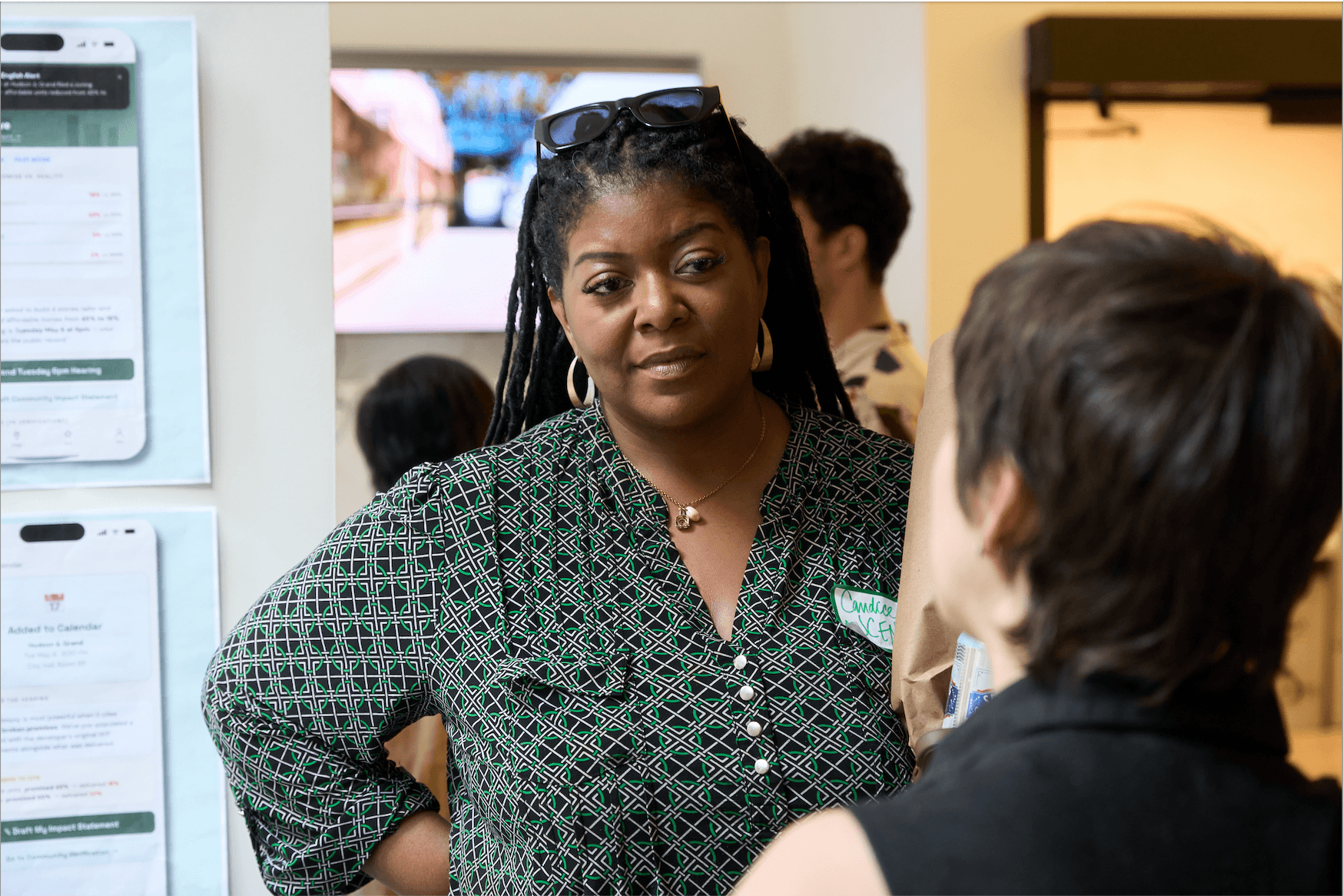
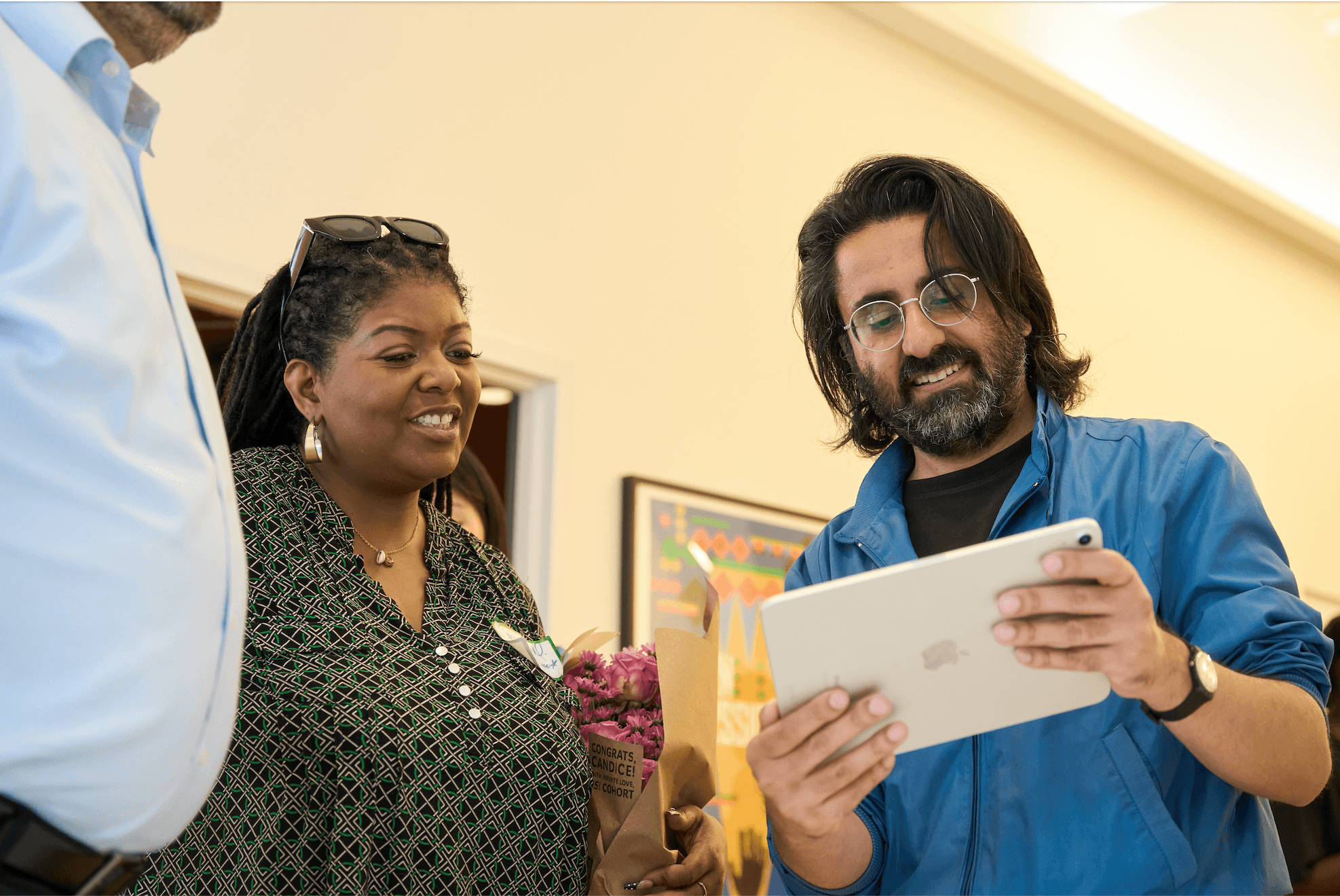
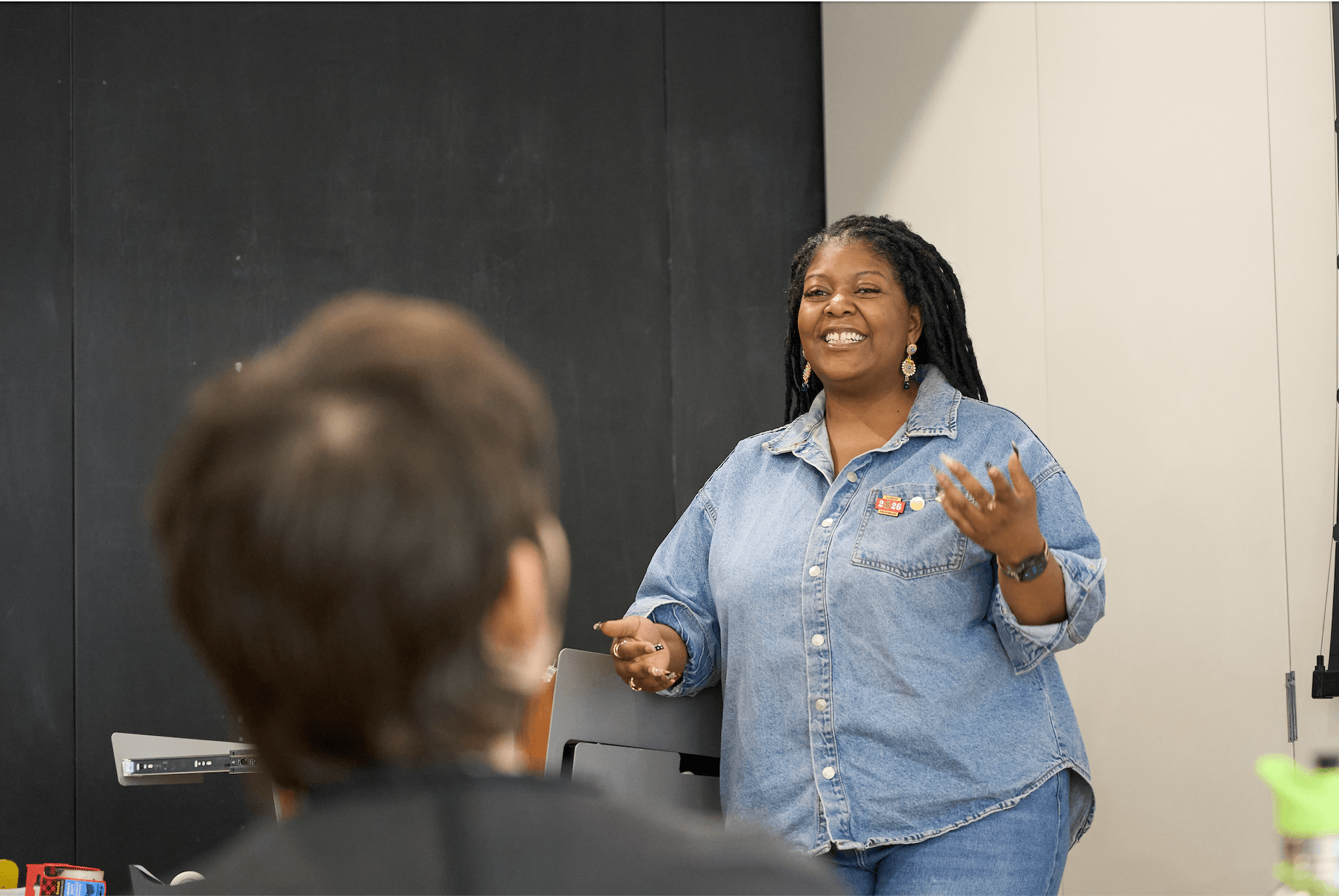
CW: It was super cool, as it was my first exhibit. I liked the design because it was very organic. I had a different plan for my setup, but then the tech glitched, and I had to change everything at the last minute. I decided to design my setup like the corner of my room, to refer to When I Think of Home (WITH) JC, my thesis project. So I brought lots of plants. I had amazing engagement, and I received great feedback. The more I talked about the project, the more exciting it was to connect with attendees. My workshop was a shorter version of my original. The engagement was fun! I gave the participants a full run-through of how I originally conducted the workshop, and we had a very open conversation. I allowed participants to try wireframing and put in tiles. Someone at the conference even offered to put my project on the Jersey City Mayor’s desk!
RL: How did presenting at Makeshift influence the future of your project?
CW: The connections I made there gave me the push I needed to know this is something I need to see through. It helped me put a different lens on my project, not just as a designer, but as a community member. Lots of people said they wanted an app like this for their community! On the professional side, I received feedback from many attendees that they see this as the future of community involvement in accessible ways – and that was my goal!
THIS INTERVIEW HAS BEEN EDITED FOR ACCURACY. PHOTOS BY SVA ALUM AQUA HSU, COURTESY OF SVA MFA INTERACTION DESIGN.
More related links
- Aging in Play Reaches New Audiences | Games for Change Festival + The School of Radical Attention Blog
- And the winner is... | SVA Alumni Scholarship 2026 Awards: The impact of PLAY Blog
- Illustrating Cultural Preservation | Traveling God: A New Book by DSI Alumni Blog
- Three New Social Innovation Design Blogs | MFA DSI Alumni Write and Reflect Blog