Design eco-social change.
MFA Design for Social Innovation asks:
- How can design shift us towards more healthy, caring systems?
- What conditions and collaborations enable communities, systems, and ecosystems to thrive?
- How can eco-social design increase innovation and our capacities for change?
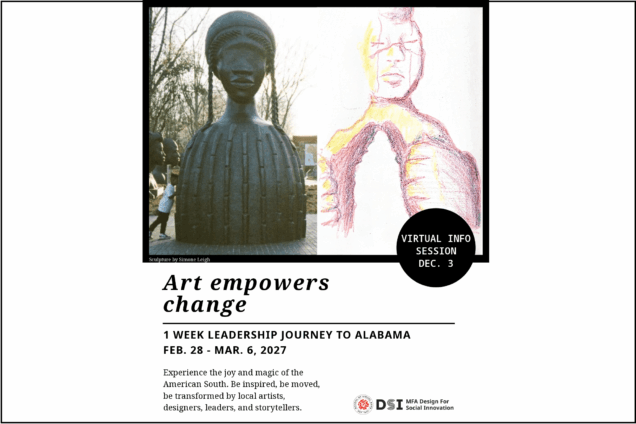
DECEMBER 3
Info Session - Legacy Leadership Journey to Alabama
Join us on December 3 to learn more about this one-week social change leadership journey to Montgomery, Selma, and Birmingham, Alabama – the “jewels of the South” and birthplace of the Civil Rights Movement. We experience firsthand how art, design, and creativity shape, inspire, and galvanize change worldwide.
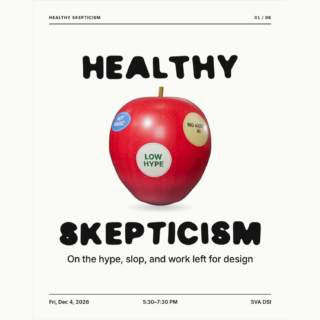
Healthy Skeptism: On the hype, slop, and work left for design
Grace Kwon (MFA DSI ’20) brings together practitioners from The New York Times, Airbnb, Mastercard, and MetLife to compare notes on what’s real, what’s noise, and what’s worth saving in the work, life, and possible death of design as we know it.
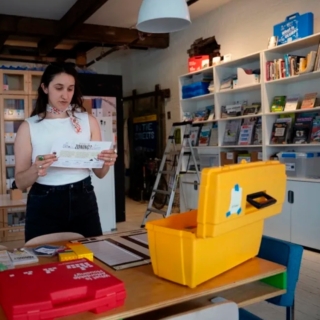
Pilar Finuccio (MFA DSI '26) builds civic curiosity at CUP.
Pilar Finuccio (faculty, MFA Products of Design; MFA 2018 Design for Social Innovation) has served as CUP’s executive director since 2023. In that role, she leads a team that collaborates with freelance artists, attorneys, social workers, and organizers to research and produce a range of printed materials, videos, and interactive kits.
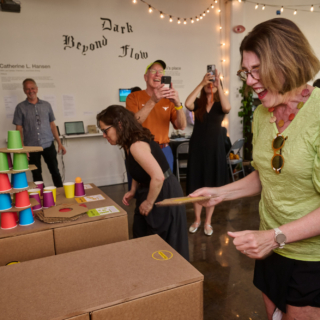
Aging in Play gains Radical Attention and new audiences
Hao Jie Sim and Xiaolan Fu (MFA DSI ’26) chat about presenting Aging in Play (AIP) at the Games for Change Festival and The Strother School of Radical Attention (SoRA). As they bring their project into different contexts, they are also considering how to contextualize AIP for new audiences.

Lettuce: Eat Together
Kexin (Catherine) Zhang and Ziyuan (Jessie) Wang (MFA DSI ’23)
Lettuce: Eat Together is a series of dinners aimed at creating a guide to reducing food waste. Participants can share their surplus food with others and organize community dinners to cook and enjoy dishes made from leftovers. The events also include interactive games and educational activities that help participants learn about food waste and raise awareness about the issue. By monitoring changes in people’s thoughts and behaviors before and after events, this approach aims to promote a zero-waste community by raising awareness of food waste and encouraging people to take action to reduce it in their daily lives.