JUNE 2026
Aging in Play Reaches New Audiences | Games for Change Festival + The School of Radical Attention
MFA Design for Social Innovation’s Communications + Project Coordinator, Riley Ladner, sat down with Hao Jie Sim and Xiaolan Fu (MFA DSI ’26), of Aging in Play, to chat as they prepare to present Aging in Play at the Games for Change Festival and The Strother School of Radical Attention (SoRA).
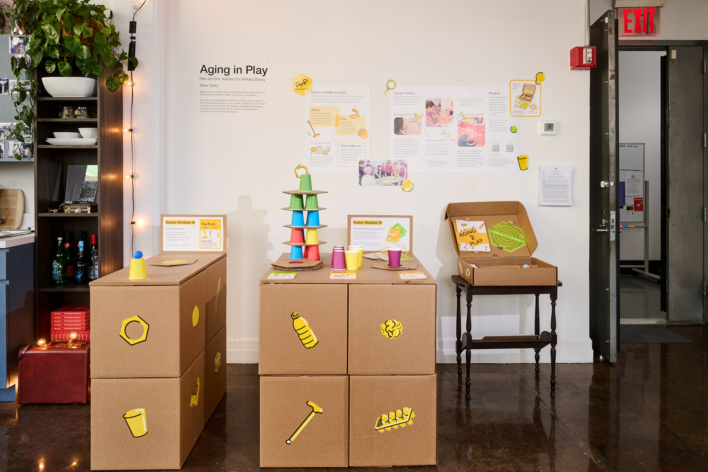
Experience Aging in Play in New York City this summer at the Games for Change Festival, July 21-22, and at the School of Radical Attention (SoRA), June 4-July 10.
Riley Ladner: Aging in Play is really reaching so many different platforms and audiences as you have exhibited at SVA Galleries this past February, and are now preparing to present at the School of Radical Attention and the Games for Change conference! How do you see this project being influenced by your involvement at these different organizations?
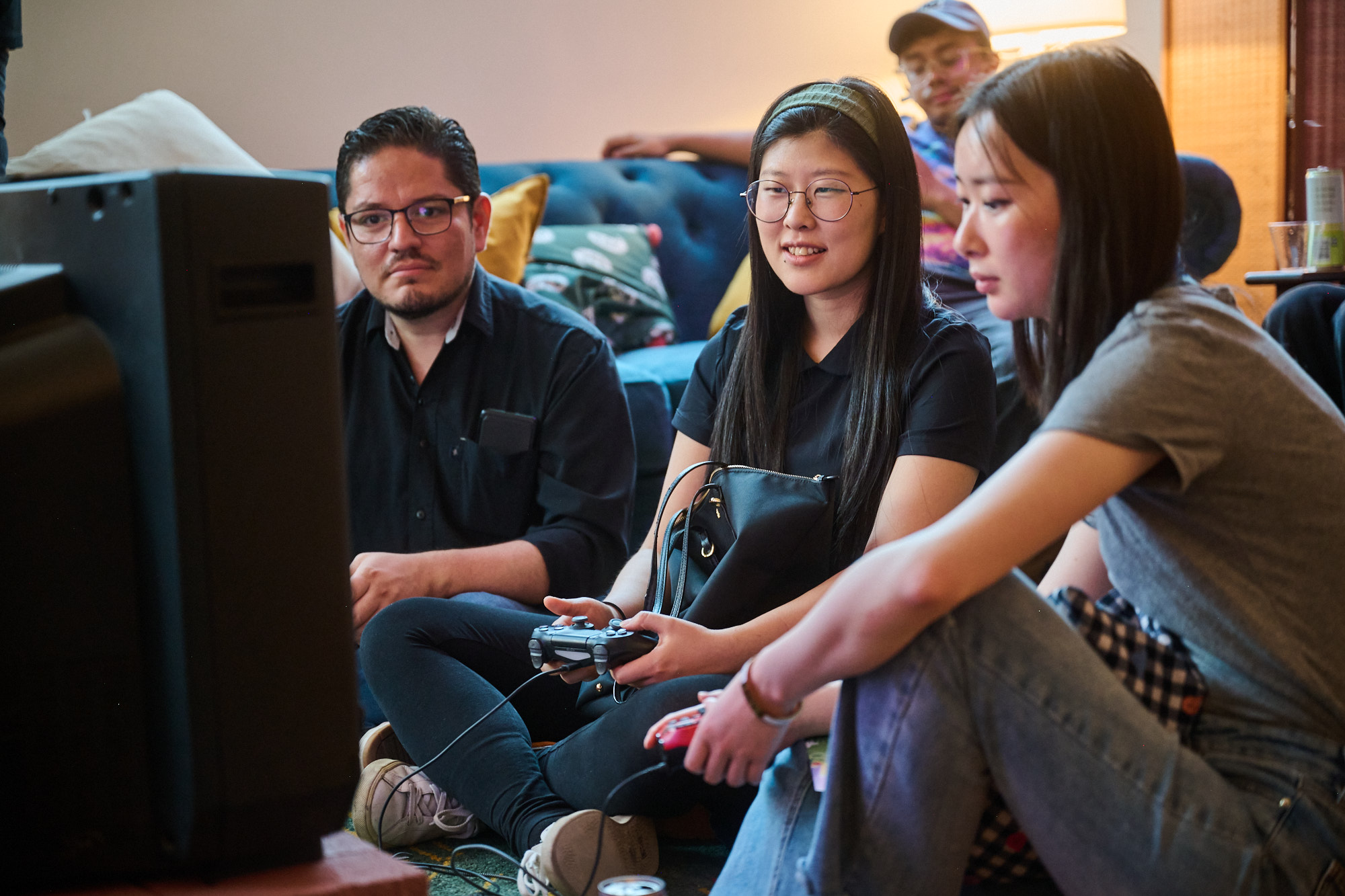
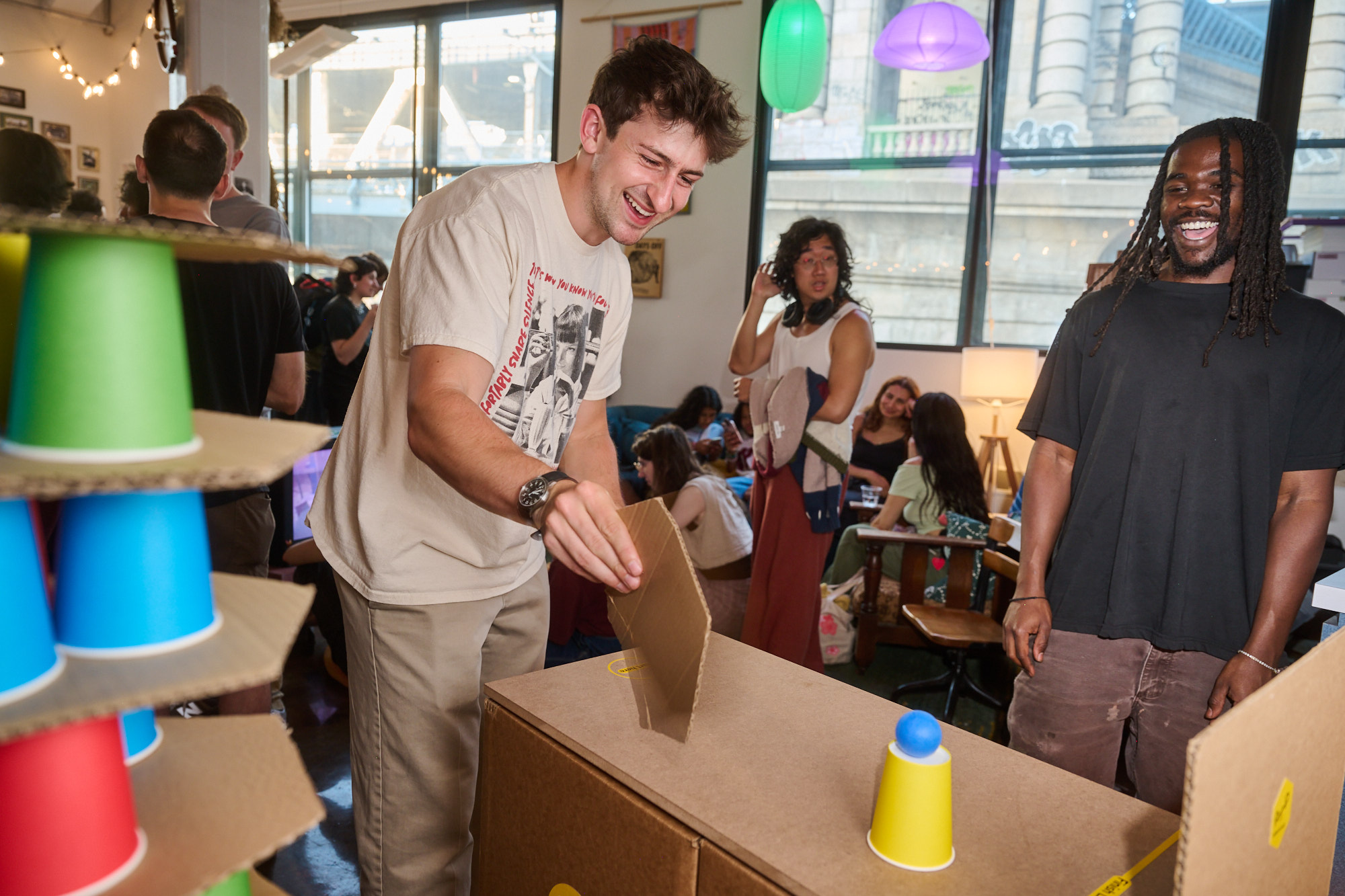
Aging in Play: As we bring our project to different contexts, we’re also thinking about how to contextualize it for each audience. For The Strother School of Radical Attention (SoRA), the audience is not old; it’s younger, so we’re thinking about how to make it relevant to them. Through these presentations, we’re excited to talk to people and hear their feedback to adapt. For the SoRA audience, we are considering: what does it mean for them to play and for them to play with older relatives? How can they contribute to Aging in Play?
We are also hosting a workshop at SoRA at the end of June. The people who will attend will likely be younger, so this will be our first time co-creating with younger people. Their role in the workshop will be to create games we can bring to add to our library and share with the older community.
As we prepare for these exhibitions, we think a lot about how our work shifts when we talk to different audiences.
RL: How did your exhibition at the SVA Galleries: Tightrope affect your planning for your presentations at the School of Radical Attention and Games for Change?
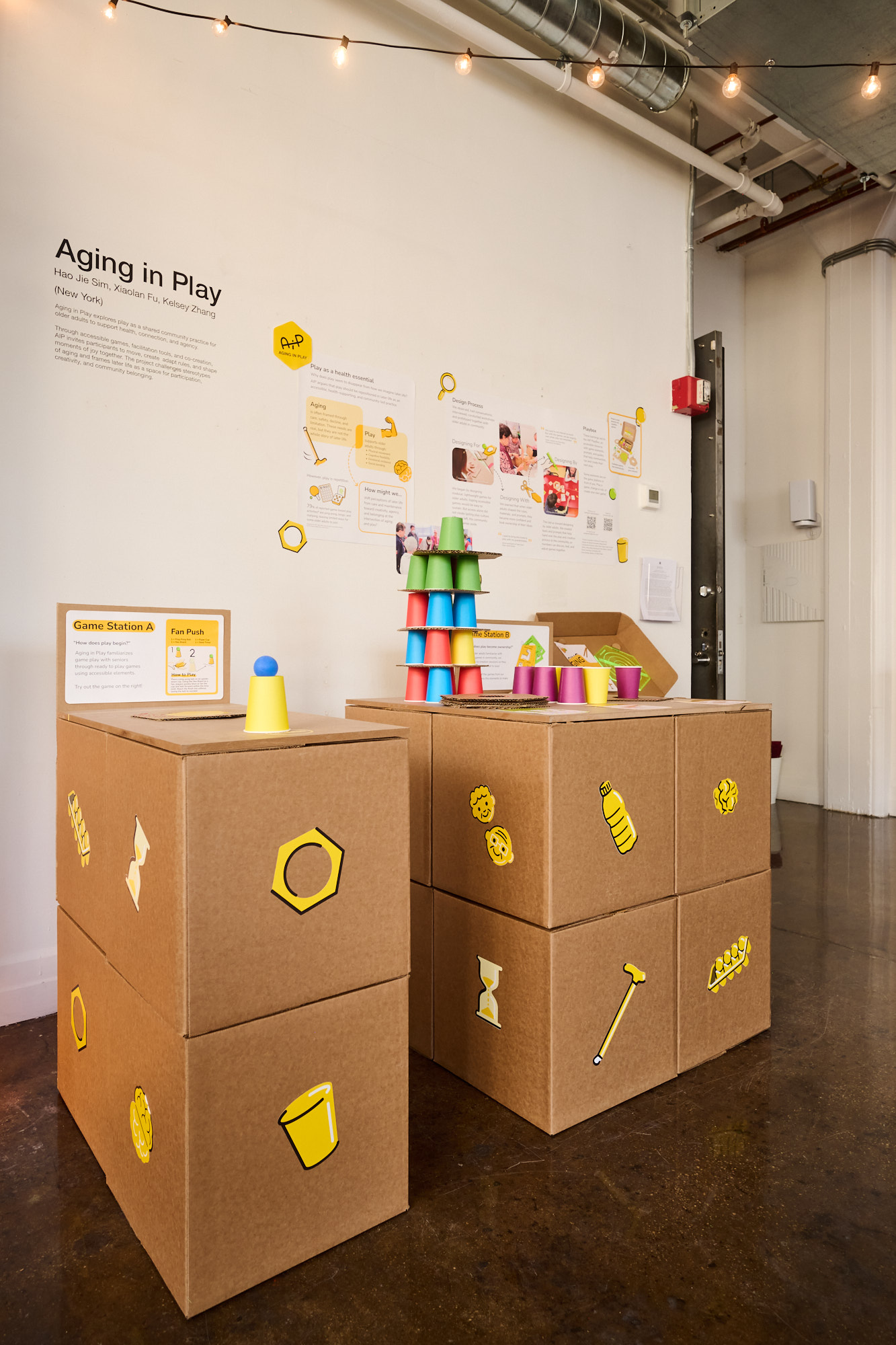
AIP: Thanks to our exhibit at SVA Galleries, we have the experience and materials we can reuse for future exhibitions. After exhibiting at the SVA Galleries’ Gramercy Gallery in February 2026, we took time to think about what it means for someone who’s not an older adult to experience AIP.
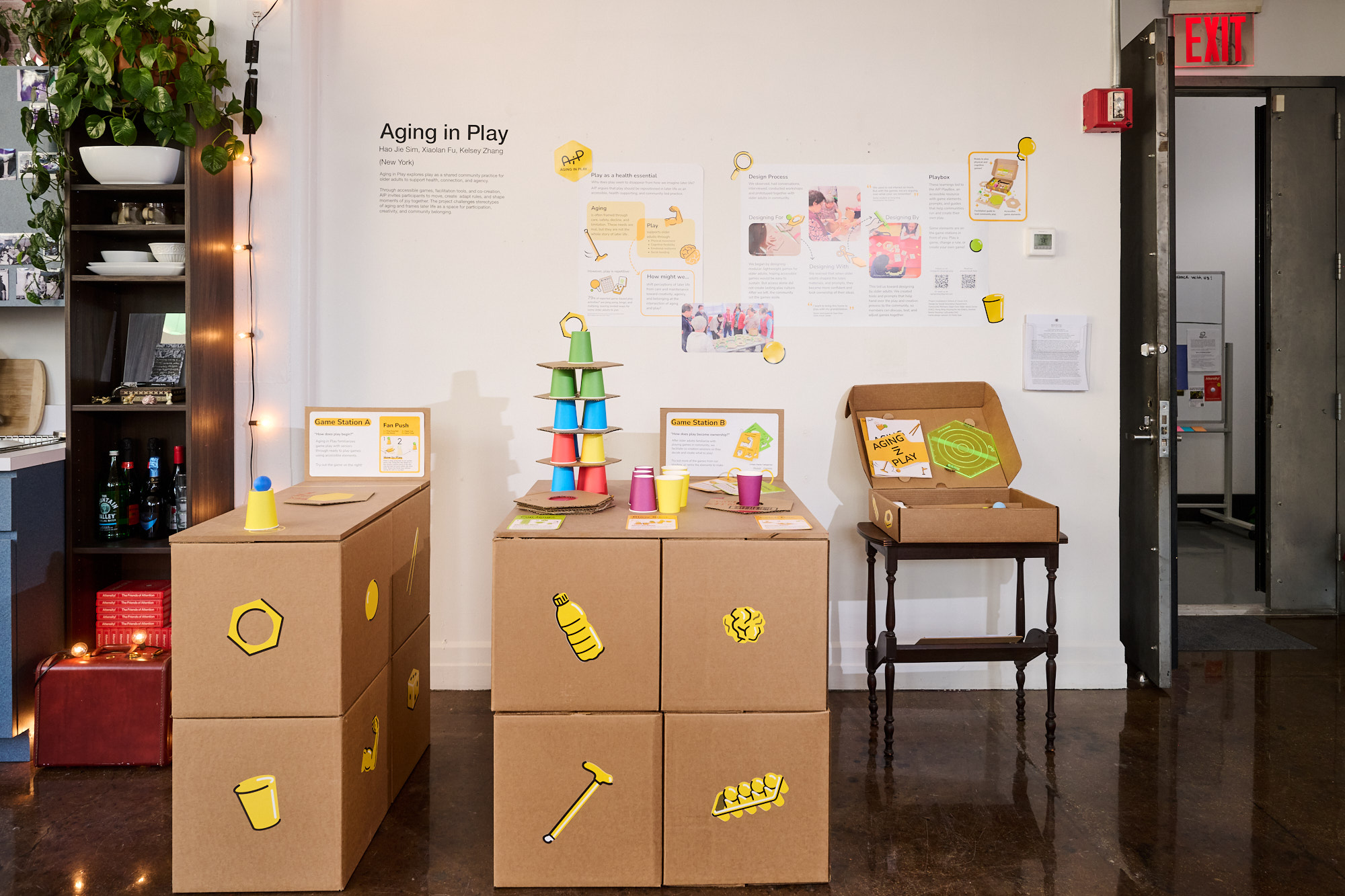
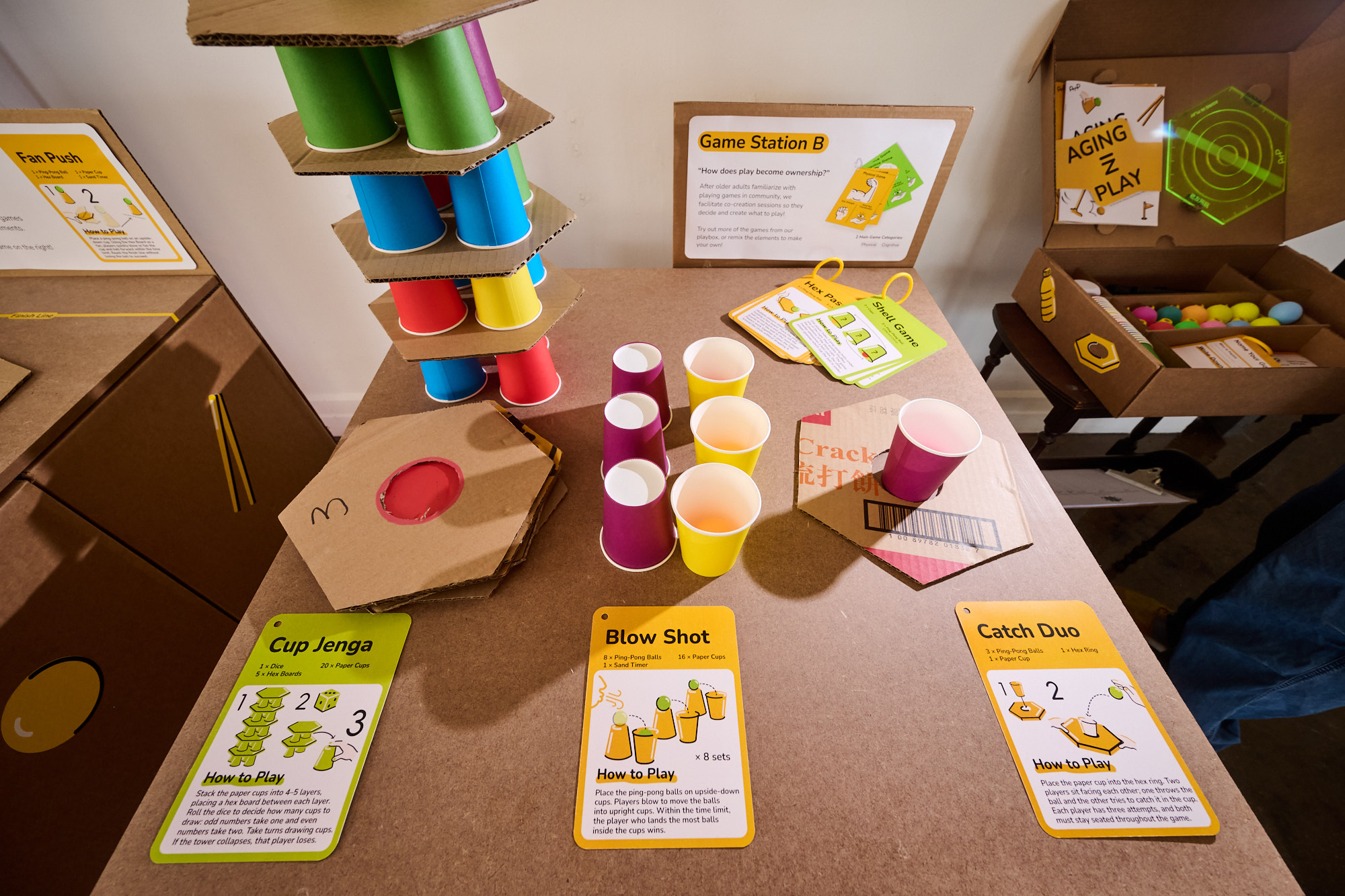
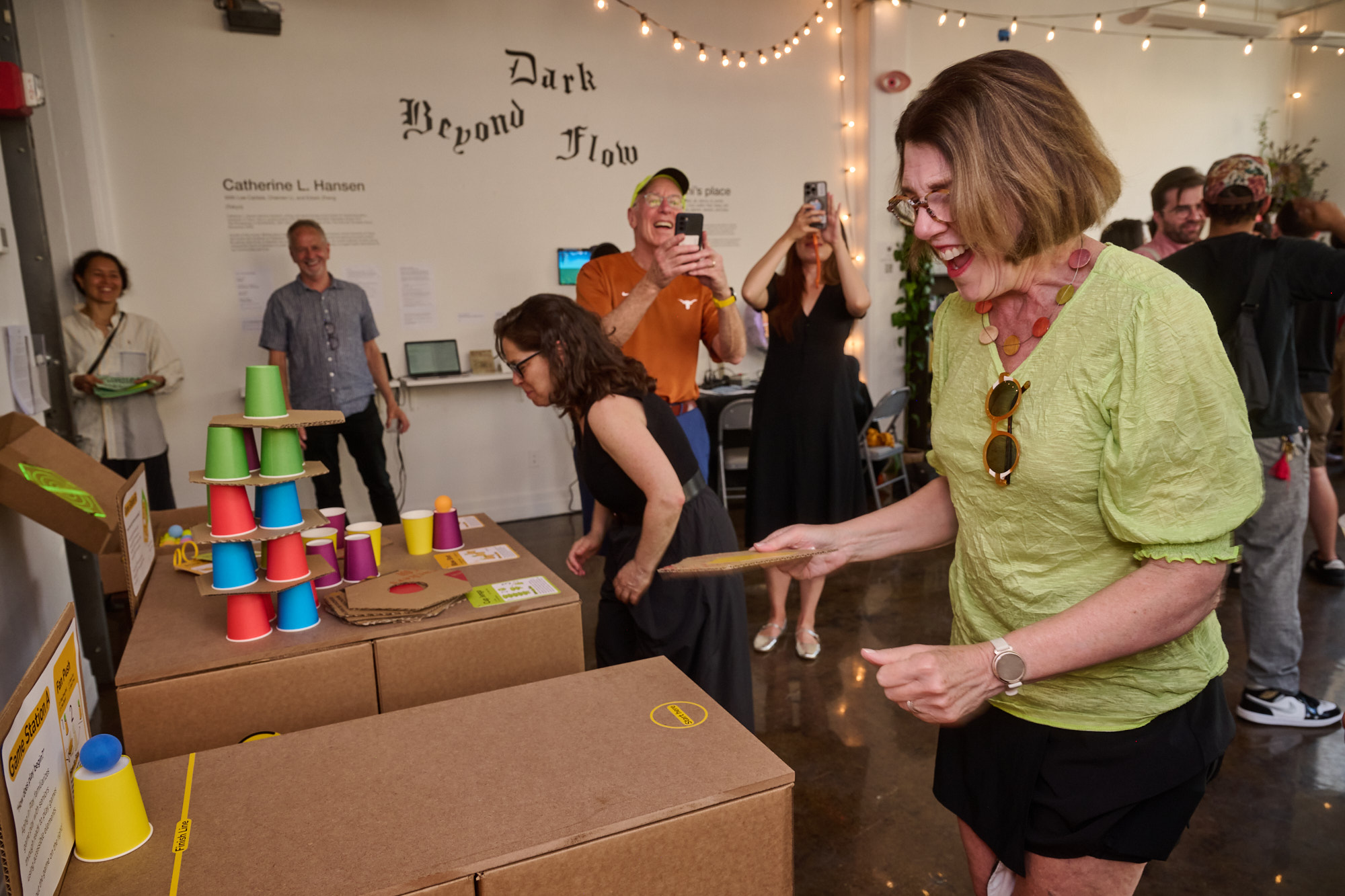
For SoRA, we will take attendees through a quick summary of our process and then guide them through our game stations so they can experience the AIP playbox.
SVA Galleries has a more formal approach to audience interaction, whereas SoRA has a more interactive framing. Overall, the SVA Galleries experience showed us how much we can gain by sharing our project. For example, community members from Norfolk Senior Housing came to the gallery exhibition, and it gave them a clear visual of how AIP works, which made it easier to facilitate our Train the Trainer workshops.
RL: Big congratulations on speaking at Games for Change! How did your Games for Impact class at MFA DSI influence your project?
AIP: Thank you! Games for Impact took place at the same time as the start of our thesis project generation. In Games for Impact, we learned how to create games and realized we could help older adults do the same. Creating games isn’t always a smooth process; our instructors showed us how to support game participants best. The general framework we learned about redesigning and adapting games carried over to how AIP facilitates these game sessions with older adults. In the class, we practiced redesigning games, like what if tic-tac-toe were 3D. So when we were adapting our golf game, for example, we focused on creative ways to build accessible games, like using materials that anyone has.
RL: The School of Radical Attention uses creative projects and public programming to build communities’ commitment to attention. How does that connect to Aging in Play?
AIP: The exhibition we are presenting in, Beyond the Dark Flow, highlights games that don’t trap you in a loop of addiction. The link between AIP and SoRA lies in reformatting and reimagining game creation that operates through community engagement. SoRA’s mission is against addictive digital attention; AIP is very physical, handheld, human. AIP is a way people gather. Ultimately, the connection became clear, especially after we met the curator of this exhibition at a Chinatown basketball league game! They later reached out to us, asking us to participate in this exhibit.
RL: Take me through the iterations of how you present Aging in Play across these different platforms?
AIP: For both SoRA and Games for Change we are doing a workshop. We’ve been contemplating: how do we bring the experience to different groups of people and take feedback from there? We’re not totally changing AIP to fit their needs. The messaging stays the same: how do we build intergenerational connections through play?
As we play with the older adults, we cultivate intergenerational play. With these presentations, we will not have the older adults with us, so we’ve been considering how that changes the experience and understanding. We’ve been thinking about working with a center that has intergenerational programs, as the games we have developed are quite universal.
Across our different presentations and exhibitions, it always comes back to: how do we create conditions for people to interact and play together, and how do we support the benefits that emerge? How do we design for what we have – spark creativity and enable interactions?
Photos courtesy of the Strother School of Radical Attention, photographed by Caleb Bryant Miller.
THIS INTERVIEW HAS BEEN EDITED FOR ACCURACY.


More related links
- Finding the Nexus Between Accountable Tech and Housing Development Blog
- And the winner is... | SVA Alumni Scholarship 2026 Awards: The impact of PLAY Blog
- Illustrating Cultural Preservation | Traveling God: A New Book by DSI Alumni Blog
- Three New Social Innovation Design Blogs | MFA DSI Alumni Write and Reflect Blog