Frequently Asked Questions
For Prospective Applicants:
I’m interested in applying to DSI, but what will it be like?
DSI is committed to growing and evolving social design as a practice. As a graduate student, you will have the opportunity to work alongside knowledgeable faculty and the broader design community. You will foster mentorship among students and alums. You will expand your thinking and possibilities by thinking critically and honoring new perspectives, identities, backgrounds, and design approaches.
We do the work inside ourselves – examining our emotions, biases, values, and diverse perspectives – so that we can do this collaboratively and responsibly out in the world. We embody our practices, behaviors, and mindsets in our interactions with one another at DSI and with our external communities. Over the next two years, you will hone in on your desired goals and outcomes, working together to deeply consider what you’d like to contribute to the world and build the lasting relationships and partnerships needed to achieve this work.
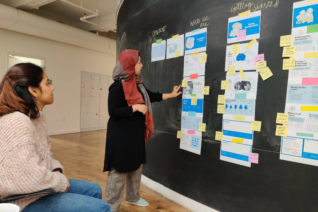
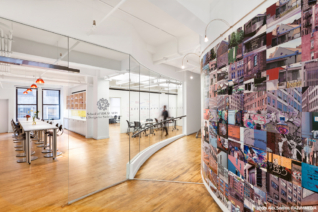
Our work is hands-on and experiential. You will explore research, prototyping, and iteration that support critical and more equitable relationships between designers and their communities. So, in addition to the working spaces at DSI, you can access the art and design resources at SVA. For example, the SVA library, RISO printing lab, and the Visual Futures Lab, which offers tools and advisors for fabrication projects, along with fellow SVA graduate students, such as those from the Interaction Design and Products of Design programs, who share the lab.
If I am not a designer, can I still apply?
Absolutely. Our students come from diverse fields, including engineering, healthcare, architecture, fine arts, filmmaking, economics, human rights, and education. SVA also offers classes in design for those who need additional support. You will also gain significant exposure to design and art around you in New York City.
You have the option to submit a portfolio, a case study that examines a specific project, OR a proposal for a project or research as part of the application process, which we hope will enable you to showcase your strengths in various ways.
Is DSI STEM certified?
Yes, the Design for Social Innovation MFA Program is STEM certified. Not only does this certification formally acknowledge the multifaceted qualifications and expertise gained by our students, but it also makes additional scholarship and grant funding available to both domestic and international students.
For our international students, this STEM designation opens up several opportunities. Students who earn STEM-designated master’s degrees are able to apply for a 24-month STEM extension to their 12-month Optional Practice Training (OPT) period, which allows them to work on a student visa. With this 24-month extension for this specific visa, the total time that international students can stay and work in the U.S. after graduation is 3 years, instead of 1 year.
What kinds of jobs will graduates of MFA DSI do after?
DSI graduates are employed in design studios, agencies, and global consultancies, as well as in corporations and organizations, both public and private. They work on Innovation, HR, or Corporate Social Responsibility teams, as well as in non-profit organizations and government agencies. Many are community leaders, activists, and social entrepreneurs. DSI alums are experienced in navigating the design of interventions and systems, communities, organizational models, communication, information design, mapping, and implementation, and working with real-world partners. Check out what our alums are doing.
MORE ABOUT OUR PROGRAM FOCUS:
What do you mean by “Social Design”?
Social Design is the creation of new social conditions — in cities, corporate cultures, communities, and the environment — resulting in increased creativity, equity, social justice, greater resilience, and a healthy connection to nature. It is relevant to every business, government, city, neighborhood, and individual.
How is DSI different from a traditional design curriculum?
At DSI, you will learn to create and develop a design practice that centers on relationship-building and community investment across various settings, including governments, communities, businesses, nonprofits, and other organizations.
Because social design supports change through the creation of new social conditions, it is about energizing all collaborators involved, particularly those with lived experience. It means that we explore root causes, imagine new narratives, and seek approaches that benefit (and not harm) our communities
During the facilitation process of social design, we encourage the expansiveness of “making” as a part of the iteration process, as a way to form more nuanced and intentional relationships with our collaborators. This may feel different from a traditional design emphasis, where the objects themselves often receive the bulk of the attention. We emphasize that relationships between people and artifacts are most important, instead of only “the object” itself.
What are your values?
Designers come from different kinds of backgrounds and experiences. We encourage students to draw on lived experience from other disciplines and practices, and we support those who are not formally trained in design. DSI is interested in connecting with potential students and collaborators who share our goals and pedagogy, and who also have a passion for investing in communities, our planet, and beyond.
When we design our curriculum, we reflect on the history and legacy of the global and economic structures that define our current world. We adjust our curriculum to respond to evolving needs and changes, and we continually reflect on ways to improve it and grow social design as a practice.
We are also a diverse group of pioneering practitioners passionate about design, development, policy, health, media, art, tech, government, gaming, research, business strategy, activism, and innovation.
Who will I be engaging with?
Here at DSI, you learn and engage with passionate peers and faculty from all over the world.
We encourage people from diverse backgrounds to engage with social design, including those without formal design education. Additionally, by building cross-cultural literacy in the context of social design, employers will be impressed by your ability to navigate multiple complex settings while fostering relationships and developing effective solutions.
Will I get to meet practitioners?
We are visited by the most exciting global experts and speakers in science, business, philanthropy, entrepreneurship, creativity, and activism (and some things yet to be defined). By the time our students leave the MFA program, they are connected to an unmatched network of potential partners.
Why do students go to DSI?
Our students join us because it fulfills one of the deepest needs of the human condition—to shift and make a positive impact, disrupt the status quo, advocate with communities, and use creativity to bring something to life that has not existed before. Our students are remarkable people…curious, unpredictable, and visionary, and we are excited by what they do at DSI.
Where will I be?
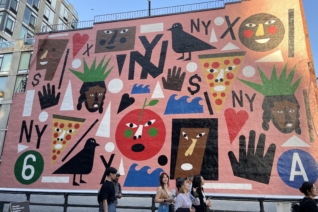
We’re in the heart of New York City, but we connect with many institutions and collaborators from around the world.
Application Process
Where can I learn more about applying?
More information about applying to Graduate programs at SVA is available here.
When is the application deadline?
Applications will be accepted and processed on a first-come, first-served basis, as space remains available. Applying before the Priority Deadline (Jan 15) means the earliest consideration for our department scholarships. We welcome both full-time and part-time students. Please note that we only accept students to enter the program in the Fall semester.
How much does the program cost?
For anything regarding tuition and fees please refer to the Student Accounts page. The link is sva.edu/tuition
Do you offer scholarships or financial aid?
MFA DSI offers partial merit- and need-based scholarships based on a student’s application. No additional forms are necessary to be considered for these scholarships. Applying before the Priority Deadline (Jan 15) means the earliest consideration for our department scholarships. DSI will offer an appeals process to increase scholarships after acceptance to the program. SVA offers financial aid to eligible individuals. SVA offers a match of any outside scholarship, up to $2,500, that a student obtains for enrollment at SVA. Please visit SVA’s Financial Aid page for information on scholarships, grants, and loans.
How many graduate students are accepted for each class?
We accept 25 graduate students per academic year.
When are the classes held?
Because SVA’s faculty are all working professionals, classes are generally from 6-9 pm EST, Monday through Thursday. Some classes, workshops, events, and student project work will take place during the day or weekend, so please keep that in mind if you are considering part-time or full-time employment while completing the MFA.
What software do you use?
DSI students utilize Adobe Creative Suite, Microsoft Office, and Google Suite, as well as online collaboration tools such as Figma, Miro, Mural, Notion, Canva, and Zoom, along with emerging technologies like AI and data processing and visualization tools. Design basics courses can be arranged for those who do not have mastery of the core design applications, and should not discourage candidates from applying.